What Is a Work Instruction?
A work instruction is a step-by-step document that describes exactly how to perform a single task — the specific actions, tools, materials, and checks required — in more detail than a procedure or SOP.
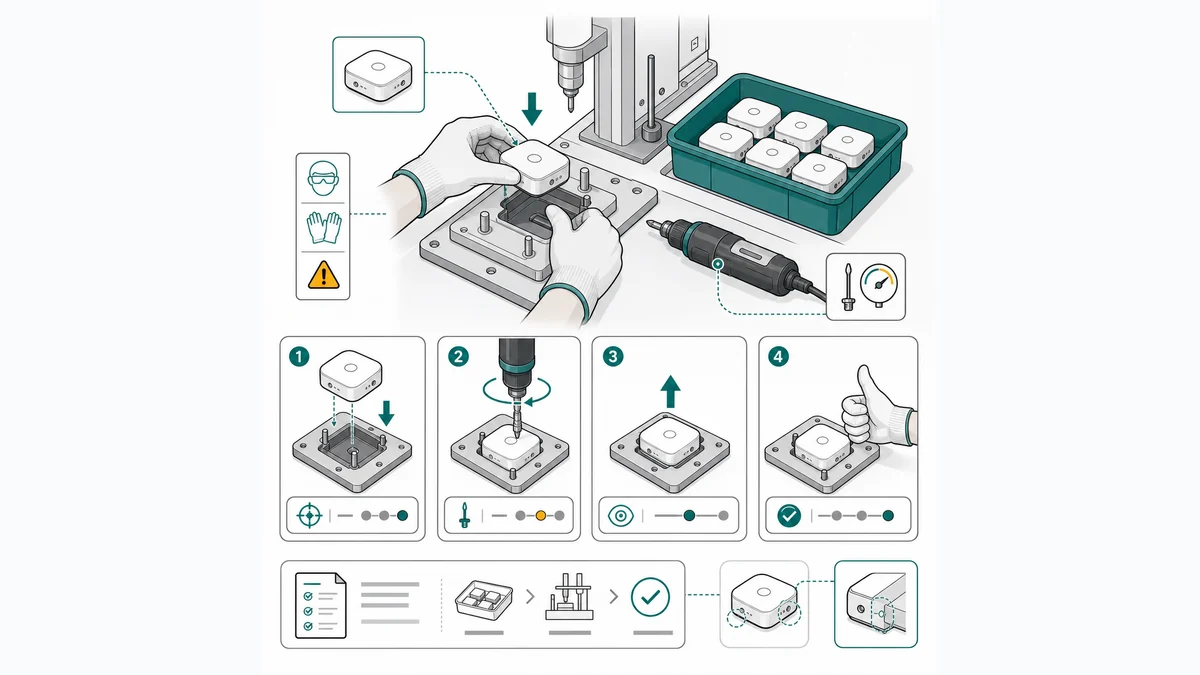
Work instruction vs SOP vs process
The three terms form a hierarchy of detail. A process describes what happens across a whole workflow at a high level (for example, "order fulfillment"). A standard operating procedure (SOP) describes who does what and when within that process. A work instruction sits at the bottom and describes how one person performs one specific task, action by action.
A useful test: an SOP might say "torque the housing bolts to specification", while the work instruction says which bolts, in which sequence, with which torque wrench, to what value, and what a correctly seated housing looks like.
What a good work instruction contains
Effective work instructions share a common anatomy: a clear task title and scope, the required tools, parts, and safety equipment, numbered steps with one action per step, acceptance criteria or quality checks, and warnings placed before the step they apply to — never after.
Visuals carry most of the weight. Each critical step should have an image showing the correct hand position, part orientation, or expected result, because operators scan pictures far faster than they read paragraphs. Quality standards such as ISO 9001 expect documented information like work instructions to be available and controlled at the point of use.
How work instructions are produced
Most teams start by photographing the task as an experienced operator performs it, then write the steps around the photos. The weak point is usually the imagery: raw photos are cluttered, inconsistent, and expensive to reshoot when a fixture or part changes.
That is why mature documentation teams convert photos into clean line illustrations with consistent style, callouts, and highlighted actions — either through technical illustrators or AI tools that generate manual-style figures from the photos directly.
Finished instructions are then published where the work happens — printed and posted at the station, or delivered through digital work instruction software that handles versioning and sign-off. Whichever channel is used, the document owner should watch for steps that generate repeated questions or defects: those are the steps whose text or figures need another pass.
Frequently asked questions
What is the difference between a work instruction and an SOP?
An SOP describes a procedure at the level of responsibilities and sequence — who does what and when. A work instruction zooms into a single task within that procedure and specifies exactly how to perform it: individual actions, tools, settings, and checks.
Who writes work instructions?
Typically process engineers, quality engineers, or technical writers, working with the experienced operators who actually perform the task. The operator supplies the tribal knowledge; the writer structures it into numbered, verifiable steps.
Should work instructions use photos or illustrations?
Illustrations usually work better. Photos capture background clutter and lighting noise, and they date quickly when equipment changes. Line illustrations isolate exactly what matters in the step, stay consistent across a document set, and reproduce cleanly in print.
Illustrate your work instructions automatically
ManualFig turns workplace photos into clear, consistent work instruction illustrations with a unified style across every step.
Try the work instruction illustrator